Enjoying our coverage?
The March 2026 issue of World Pickleball Magazine is now live, featuring global league developments, tournament analysis, exclusive interviews, and stories from across the international pickleball community.
Follow @worldpickleballmagazine on Facebook and Instagram for daily pickleball news, and listen to the World Pickleball Podcast on Spotify, iTunes, and other major podcast platforms.
Changing structure is easy. Proving it holds under pressure is something else.
Key takeaways
- The progressive format increases match density across the week.
- Players must manage multiple disciplines with less recovery time.
- Seattle will show quickly whether the structure strengthens or strains the competition.
What has changed
The APP Tour has made a big change.
The question is whether it has made a good one.
This week in Seattle is not just the start of a new season. It is the first real test of a format that changes how matches are scheduled, how players recover, and how tournaments unfold.
On paper, the idea is clean.
Singles, mixed doubles, and gender doubles now run at the same time. Instead of separating disciplines across different days, everything moves together through the draw.
In theory, that creates continuity. More action across the day. A tournament that feels connected rather than segmented.
Why this format could bite
But it also removes control.
Players are no longer moving through the week in defined phases. They are shifting between formats, adjusting constantly, and doing it with less time to recover.
That is not a small change. It is a different competitive environment.
A long match on Thursday does not stay on Thursday. It carries into the next round, and the next discipline. Fatigue becomes part of the structure, not just the competition.
And that is where formats either work or start to show cracks.
If the best players are still able to perform cleanly across multiple matches, the format holds.
If match quality drops, or if results begin to reflect exhaustion rather than execution, the structure becomes part of the problem.
That is the risk.
Why Seattle matters
Seattle will not answer everything.
But it will show enough to tell us whether this is a system that enhances competition or complicates it.
Because formats are not neutral.
They shape outcomes.
They influence how much recovery matters, how quickly players must adapt, and how often control can be maintained across a full week.
This is where the APP’s decision becomes more than operational. It becomes competitive.
That is what makes this week more than another stop on the tournament calendar.
What this means for players and the tour
Pickleball is moving into a phase where structure matters as much as talent. In an interview for World Pickleball Podcast with Melissa McCurley, 2025 Hall of Famer and the structural genius behind the US Open (which will be released in the next week or so), she spoke at length about the importance of structure and how it helps talent.
Tours are no longer just organising events. They are defining how the sport is played at the highest level.
Format is not a detail. It is a framework.
For players, the adjustment is immediate.
The new structure compresses schedules and increases physical demand. Managing energy across multiple disciplines becomes a competitive advantage, not just a necessity.
Players who adapt quickly will benefit.
Players who rely on rhythm may struggle.
For the tour, the stakes are higher.
If the format works, it becomes a model.
If it does not, it becomes something that has to be fixed quickly.
This is now one of the more important structural stories in the current pickleball news cycle, especially as more tours and emerging pickleball regions continue to shape their own competitive models.
Stay ahead of the global game by signing up for the World Pickleball Report and getting the biggest stories delivered straight to your inbox.
The format is in place.
Now we find out if it holds.
Further Reading
- Latest pickleball news from around the world
- Tournament coverage and results
- Rankings and player profiles
- Regional pickleball coverage
Chris Beaumont
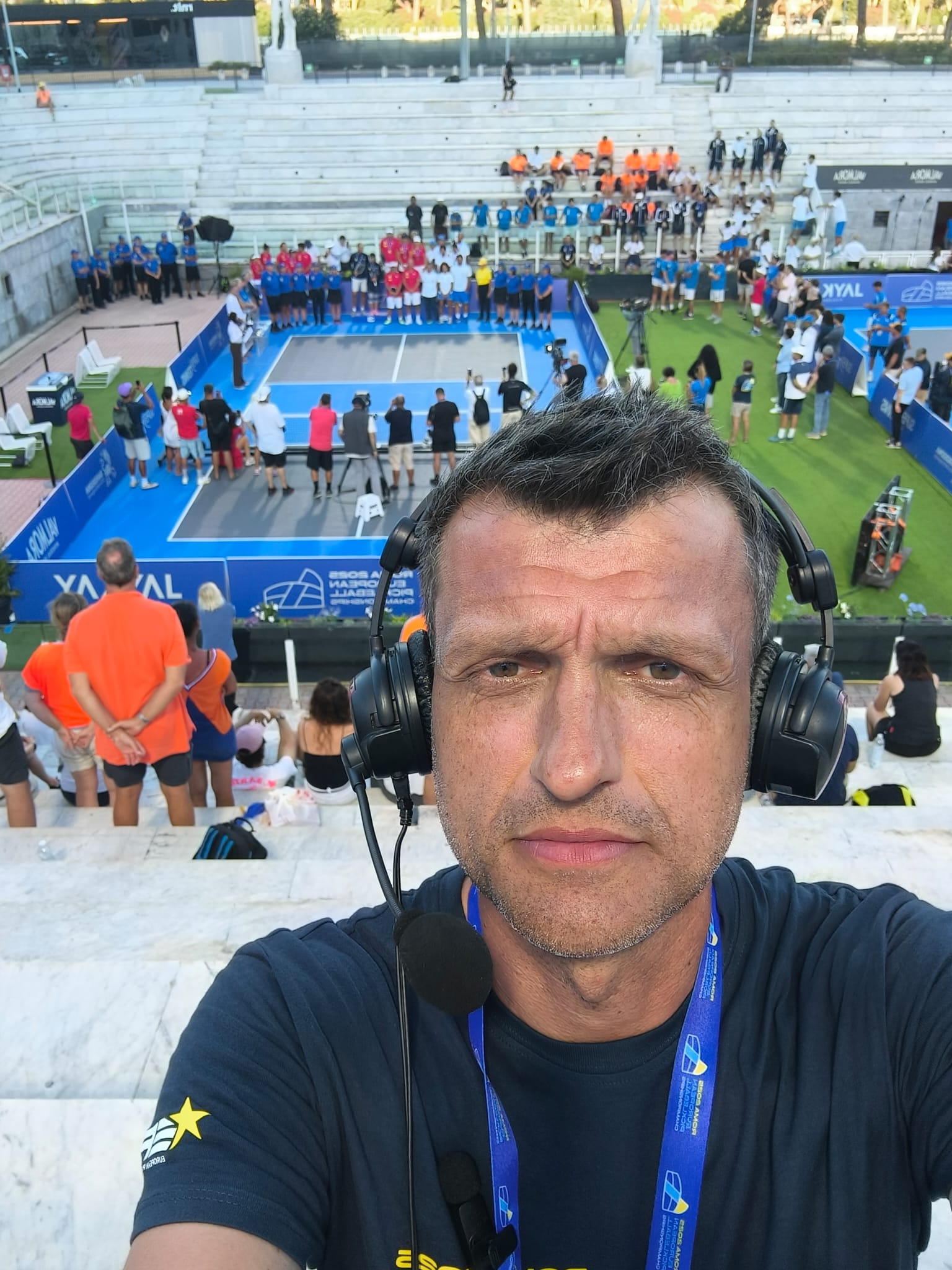
Founder and Editor-in-ChiefChris Beaumont is the founder and Editor-in-Chief of World Pickleball Magazine. Chris follows the global game closely, reporting on the latest news, developments, stories and tournaments from all five continents. He also hosts the World Pickleball Podcast, interviewing people at…
View All Articles →