A former fire chief, a health scare, and a year-long search for an answer most players already feel in their bones. Clare Frank did not just fall for pickleball. She went looking for why it holds people so tightly.
- Clare Frank’s pickleball quest began with a health scare that exposed just how much the sport already meant to her
- Her year-long journey showed that pickleball’s grip comes from shared experience as much as competition
- The game works because it satisfies physical, social and psychological needs at the same time
The moment the question became unavoidable
Most pickleball players have had some version of the thought.
What would it actually feel like if I could not play this anymore?
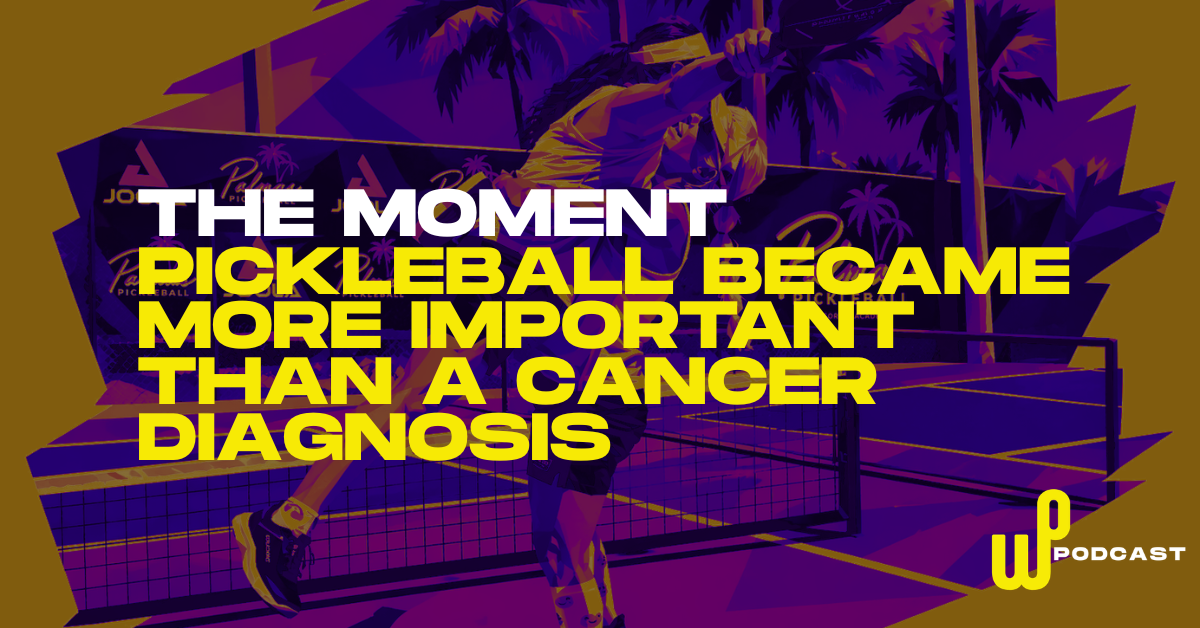
Clare Frank had that thought in a doctor’s chair while having a lump removed from her neck. Faced with a moment that should have pushed everything else into the background, her mind went somewhere more specific and, in its own way, more revealing.
She was not first thinking about the diagnosis. She was thinking about pickleball.
That was the moment the sport stopped being a hobby and started becoming a question.
Not just why people play, but why they stay
Frank is not coming to this as someone with a casual relationship to pressure. She spent 30 years as a firefighter and retired as California’s first female chief of fire protection.
That is not the sort of career that leaves much room for sentimentality about soft, fashionable activities. And pickleball, at first glance, looked exactly like the kind of thing she would dismiss.
Instead, it got her.
What followed became the basis of her new book, Just One More Game: A Pickleball Quest, a year-long attempt to understand why this particular sport gets under people’s skin more quickly, and more completely, than most others.
That distinction matters. Plenty of sports attract people. Pickleball seems to attach itself to them.
If you’re following how the global game is shifting week by week, the World Pickleball Report breaks this down every Wednesday.
The year of saying yes
Frank’s approach was not especially scientific in the formal sense. It was more immersive than that, and probably more honest too.
She made a simple rule for herself. If an opportunity involved pickleball, she said yes.
That took her to the US Open in Naples, into camps and road trips, through local games that felt absurdly urgent, and into situations most players will never experience. One of the most striking came inside a maximum security prison.
That part of the story matters because it stripped away the noise. No status markers. No lifestyle branding. No easy clichés about the sport’s culture. Just the game itself and what it does to people when they are inside it.
The prison court moment that explained more than anything else
Frank described one exchange in particular that stayed with her.
She was on court with male inmates in a maximum security prison. One player got a straightforward putaway and buried it into the net. Everyone laughed.
Not politely. Not nervously. Properly.
In that instant, the sameness of the experience overrode everything else. It did not matter who was inside the prison and who was not. It did not matter what any of them had walked in carrying from the rest of their lives. They were all just people reacting to the exact same missed chance on a pickleball court.
That, in Frank’s telling, is the sport in its purest form.
It creates a temporary shared life. The joy is shared. The frustration is shared. The absurdity is shared. You are rarely alone in it, even when you are angry with yourself.
Why the hook sinks in so quickly
Part of pickleball’s power is mechanical. It gives players satisfaction early.
You do not have to wait weeks or months to feel one clean strike, one satisfying rally, one point that makes you think, yes, there is something here. The on-ramp is unusually forgiving. You can feel functional quickly, and that matters.
But the sport does not stop there.
Just after it lets you believe you can do it, it starts showing you what you still cannot do. The strategy deepens. The frustrations sharpen. Expectations creep upward. That is where the game stops being a simple activity and starts becoming a problem people want to solve.
Frank talks about this tension well. The sport gives players enough dopamine to keep them coming back and enough irritation to stop them feeling finished.
That is a potent mix.
More than exercise, more than community
The obvious explanations for pickleball’s rise are all partly true. It is social. It is accessible. It is active without being impossible. It crosses generations better than most sports do. It works as exercise and as recreation.
But those explanations, on their own, still feel incomplete.
What Frank’s quest gets at is that pickleball layers those things rather than offering them one at a time. It provides movement, progress, contact, feedback, frustration, laughter and belonging in rapid succession. Most sports deliver some of those. Pickleball delivers nearly all of them, and fast.
That is why people start reorganising their weeks around it. That is why rainy days become tactical obstacles to overcome rather than signals to stay home. That is why missing a few sessions can make otherwise sensible adults feel slightly twitchy.
This is not just a game people enjoy. It is a game that starts to regulate parts of how they feel.
The US Open, open play, and the same emotional pattern
One of the useful things in Frank’s story is that it moves easily between levels of the sport.
At the US Open, she found the biggest pickleball party in the world was not really a party in the loose, boozy sense at all. It was a celebration of shared obsession. Thousands of people, dozens of countries, major names, and yet the emotional logic was the same as it is at a local open play session.
You turn up for the game, but you stay for everything that forms around it.
That is what makes pickleball unusually portable as a culture. The setting changes. The pull does not.
Why this matters beyond one book
Pickleball’s growth is usually explained through numbers. Courts built. players added. markets opened. investment secured.
Those things matter, but they mostly describe expansion. They do not explain attachment.
Frank’s story gets closer to the real engine. People stay because the sport meets several human needs at once, and it does so in a way that feels immediate rather than distant.
It gives people a challenge without demanding perfection. It gives them company without too much social strain. It gives them measurable improvement without making the first steps miserable. And it gives them stories quickly.
That is an unusually strong foundation for any sport.
For a deeper read on how pickleball keeps taking root in unexpected ways, our recent feature on South America’s emerging international model shows the same pattern from a completely different angle.
What Clare Frank really found
Frank set out to answer why pickleball had such a hold on her after a health scare exposed the depth of that feeling.
By the end of the journey, the answer was not one thing.
It was many things working together.
That is what makes this conversation land. It does not try to reduce the sport to one neat theory. It recognises that pickleball is powerful because it feeds multiple parts of a person at once, from movement and strategy to identity and connection.
That does not make the game less strange. If anything, it makes it easier to understand why so many people find themselves thinking about their next session before the current one is even finished.
And once you see it that way, pickleball’s rise stops looking mysterious.
It starts looking inevitable.
For a clearer view of where the sport is heading each week, you can join the World Pickleball Report here.
Listen to the podcast below, also available on iTunes, Spotify and most other major podcast platforms.
Further Reading
- Latest pickleball news from around the world
- Tournament coverage and results
- Rankings and player profiles
- Regional pickleball coverage
Chris Beaumont
Founder and Editor-in-ChiefChris Beaumont is the founder and Editor-in-Chief of World Pickleball Magazine. Chris follows the global game closely, reporting on the latest news, developments, stories and tournaments from all five continents. He also hosts the World Pickleball Podcast, interviewing people at…
View All Articles →