European pickleball is growing quickly, but it is still not a finished system.
Its tours are still jostling for position. Its calendar is getting tighter. Its best players are still working out where they belong in the wider global game. And its smartest operators are often doing more than one job at once.
That is what made the latest World Pickleball Podcast conversation with Gustaf Getarud so interesting.
Getarud is not simply another player on the European circuit. He is one of those figures who tells you something about the sport around him. He plays, organises, studies, experiments, travels, and thinks. He is part competitor, part builder, part problem-solver. In a region where pickleball is still being shaped in real time, that matters.
Because Europe does not only need athletes. It needs people who can help the sport make sense of itself.
He is not winning with the usual tools
One of the strongest threads in the conversation was the way Getarud framed his own game.
He is open about the fact that he does not come from the classic background that now feeds so many high-level players into pickleball. He is not the latest former elite tennis player. He is not somebody relying on years of polished racket instincts and superior movement. He comes at the game differently, and that difference has forced him to think harder.
That matters because too much pickleball analysis still defaults to the same old assumption. Better athletes win. Better hands win. Better backgrounds win.
Sometimes they do.
But Getarud’s value as a player, and as a voice, lies in the fact that he keeps searching for other answers. He talks about neutralising what opponents do best rather than obsessing over showcasing what he does best. That sounds simple, but it is not how most players are taught to think. It is not even how most players like to think.
A lot of players want their game to express themselves. Getarud seems more interested in making his game useful.
That is a more serious way to compete.
Smart matchplay is still undervalued in pickleball
This was probably the sharpest lesson from the interview.
Getarud described the process of facing players with more speed, more reach, more explosiveness and, in many cases, far stronger sporting pedigrees. His answer is not to pretend those differences do not exist. It is to build a style that makes those strengths harder to access.
That is where the conversation got genuinely interesting, because it moved beyond inspiration and into actual sporting substance.
He spoke about a recent match in Malaga against a former top-1000 tennis player from Spain. He knew he could not feed that opponent height, rhythm or easy movement. So he played low, awkward and disruptive. He took away the conditions the other player wanted.
That is not romantic. It is not flashy. But it is real matchplay.
And it points to something that still does not get enough attention in coaching. There is a huge difference between teaching somebody how to hit better shots and teaching them how to make a better player uncomfortable. Those are not always the same thing.
Europe has plenty of players trying to build the first version. It may need more who understand the second.
The US still teaches Europe lessons the hard way
Another strong part of the discussion centred on the cultural divide between European and American pickleball.
Getarud has spent time training in the United States, and his description of the contrast was revealing. In his view, much of the European game, especially in Sweden and similar environments, has tended to lean towards pace, power and finishing instincts. The American game, by contrast, often asks for more patience, more point construction and more emotional control within rallies.
That difference matters more than it might sound.
Because when European players first run into established American pickleball habits, they often discover that aggression alone is not sophistication. You can hit hard and still be playing the point on somebody else’s terms. You can attack and still be feeding the exact pattern your opponent wants.
Getarud seems to have absorbed that lesson properly. He still values attacking play, but he now speaks much more about resets, kitchen patterns, shot tolerance and choosing moments well. In other words, he talks like somebody who has gone looking for a fuller version of the game.
That is often the dividing line between a good regional player and somebody who keeps evolving.
Europe’s tournament scene is reaching a dangerous stage
This was where the interview moved from interesting to important.
Asked about the growing number of tours and events across Europe, Getarud did not sound naïve or blindly enthusiastic. He sees the benefits of ambition and expansion. But he also sees the risk that Europe gets carried away with the idea of growth before it has fully built the base to support it.
He referenced what happened in Swedish padel. He referenced what happened during the American tour wars. In both cases, money and momentum pushed structures beyond what the market could sensibly absorb. Eventually, reality had to catch up.
It would be foolish to assume Europe is immune from the same mistake.
Eighteen months ago, the easy answer was that Europe needed more. More events, more tours, more organisers, more energy. That was true then. It may not remain true if everybody keeps pushing in different directions at once.
Players can only be in one place at one time. The depth of the elite field is improving, but it is not infinite. And a crowded calendar does not automatically produce a stronger sport. Sometimes it just produces confusion, diluted fields and a fight for attention that nobody really wins.
That is why Getarud’s suggestion that parts of the ecosystem may one day need to work together more closely felt sensible rather than diplomatic. Europe may talk a lot about expansion this year. At some point, somebody will also have to talk honestly about consolidation.
The exclusivity question could define the next phase
The other major fault line is player freedom.
As larger structures test harder-edged approaches to growth, and as the PPA continues to shape conversations well beyond the United States, the question becomes obvious. What kind of system does Europe actually want to build?
Getarud’s answer was telling. He does not believe locking players in is the right route for this stage of the European game. His view is that the strongest tours should earn loyalty by giving players the best opportunities, the best environment and the best pathway, not by narrowing their choices.
That feels like a more mature position than simply cheering for openness on principle.
The truth is that exclusivity can make sense for a business with enough money and enough control. The PPA’s logic is not hard to understand. But that does not make it the only viable model, and it certainly does not make it the right one for every market.
Europe still has a chance to build a system that feels more open, more flexible and more responsive to the players actually trying to make their way through it. If it loses that, it may lose one of its few structural advantages.
His Francesca Rumi prediction matters
Towards the end of the interview, Getarud was asked to name a player who could be on the verge of something significant.
He picked Francesca Rumi of Italy and went a step further than the usual polite praise. He said he believes she could be Europe’s number one female player by the end of the year.
That is not a throwaway line.
It matters partly because it is bold, but more because of the reasons he gave. He was not dazzled by noise. He was struck by her reach, her court reading, her angles, her ability to create pressure with apparently simple shots, and her feel for manipulating positioning within points.
That is the kind of praise that tends to age well, because it is rooted in how the game actually works.
If Rumi does rise quickly this year, Getarud will not have spotted a hype story. He will have spotted a player whose instincts are already working at a higher level than many of her rivals.
Europe needs more people like this
The easiest mistake to make with this interview would be to treat it as a pleasant profile of a thoughtful Swedish player doing good work on and off the court.
It was more useful than that.
What Getarud really represents is a type that European pickleball keeps producing because it still has to. The sport here is not mature enough yet for roles to be neatly separated. The same people often have to compete, organise, analyse, advocate and build all at once. That creates strain, but it also creates perspective.
And perspective is badly needed right now.
Europe is entering the phase where money, tours, status and external influence will start pushing harder against each other. That can be good for the sport. It can also distort it very quickly if the loudest voices are the only ones heard.
Getarud’s voice matters because it comes from inside the game but does not sound trapped by one narrow interest. He thinks like a player, but he also thinks like somebody trying to keep the wider ecosystem healthy.
That may not be enough on its own to shape what happens next.
But Europe will need more of that kind of thinking, not less.
Stay ahead of the global game by signing up for the World Pickleball Report, our weekly briefing on the biggest stories, strongest angles and key developments from across the international sport.
Further Reading
- Latest pickleball news from around the world
- Tournament coverage and results
- Rankings and player profiles
- Regional pickleball coverage
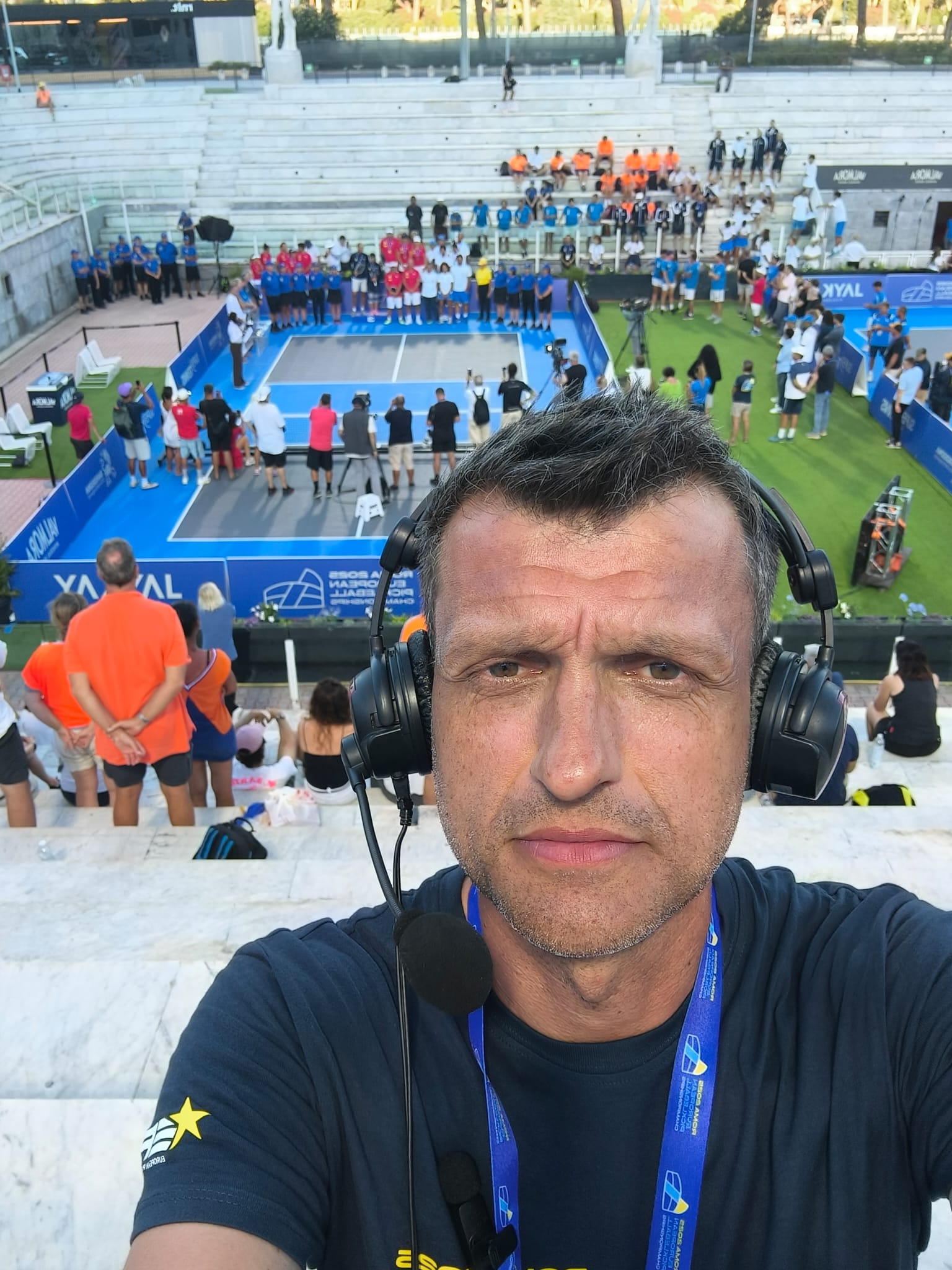
Chris Beaumont
Founder and Editor-in-ChiefChris Beaumont is the founder and Editor-in-Chief of World Pickleball Magazine. Chris follows the global game closely, reporting on the latest news, developments, stories and tournaments from all five continents. He also hosts the World Pickleball Podcast, interviewing people at…
View All Articles →