With 3,500 players, 500 professionals, and rising demand for premium access, the US Open in Naples reflects a sport that is still balancing participation with professionalism.
- 3,500 players and 53 countries underline the event’s scale
- Over 500 professionals are competing for a record purse
- Ticket lotteries now control access to show courts
- The event still blends festival participation with elite competition
The US Open is one of the biggest events in pickleball.
It is also one of the hardest to define.
This week in Naples, more than 3,500 players from 53 countries will take to over 60 courts at East Naples Community Park, according to tournament organisers. The scale is established.
What is less clear is what the event is trying to be.
A tournament with two identities
Because the US Open still sits between two versions of the sport.
On one side, it remains a participation-driven festival. General access across much of the park is open, players move between matches freely, and the atmosphere still carries the feel of a community event.
On the other, it is becoming a structured professional product.
More than 500 professionals are competing for a purse exceeding $160,000, with leading names such as Anna Leigh Waters anchoring the field. Access to the Zing Zang Championship Court is now ticketed, with demand high enough that organisers introduced a lottery system for 2026.
Those two realities do not fully align.
The same event that allows thousands of amateur players to compete across multiple divisions is also trying to deliver a premium spectator experience at the top end.
That creates tension.
The US Open is not struggling with growth. It is struggling with identity.
For readers looking at how the sport is evolving beyond individual tournaments, the April issue of World Pickleball Magazine explores how events, leagues, and governing structures are shaping the global game.
One venue, two experiences
Walk through East Naples Community Park during the week and the contrast is immediate. Outer courts are constant and open. Towards the centre, access tightens, schedules are fixed, and presentation becomes more controlled.
The layout of the event makes that clear.
Outer courts operate at volume. Matches overlap. Players cycle through rounds quickly. The experience is active, accessible, and constant.
Closer to the centre, the tone shifts.
Matches are scheduled. Seating is limited. Access is controlled. The experience becomes something to watch, not just take part in.
This is not a flaw.
It is the result of an event trying to serve two audiences at once.
Participants
and spectators
Scale has started to change the feel
For years, this balance worked.
It allowed pickleball to grow without forcing a decision about what it wanted to be. Events like the US Open could expand while still feeling open.
But scale introduces pressure.
As demand increases, access becomes something that needs to be managed. Ticketing replaces open entry in key areas. Scheduling becomes tighter. The professional layer becomes more distinct.
Each step is logical.
Each step also moves the event slightly away from its original feel.
At some point, it may have to choose
The US Open does not need to resolve this tension yet.
In many ways, it is what makes the event unique.
But it does raise a question that will not go away.
Can one tournament continue to operate as both a mass participation festival and a premium professional product?
Or will those two versions of the sport eventually need to separate?
Readers can also follow how tournaments are evolving through the World Pickleball Report, our free weekly newsletter, and the World Pickleball Podcast, where the structure of the sport is becoming an increasingly important theme.
The US Open does not need to decide what it is yet.
But at some point, it will.
Further Reading
- Latest pickleball news from around the world
- Tournament coverage and results
- Rankings and player profiles
- Regional pickleball coverage
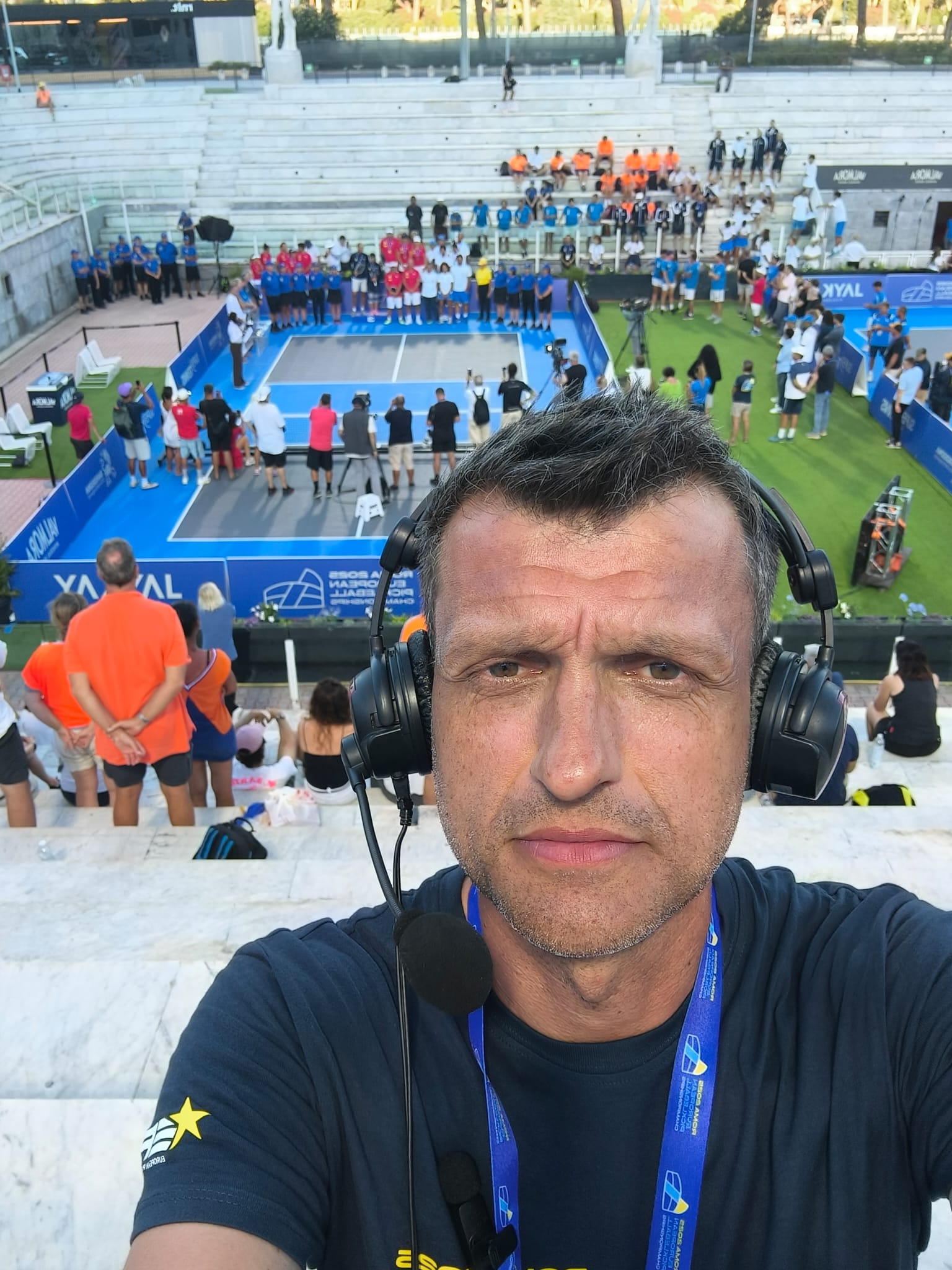
Chris Beaumont
Founder and Editor-in-ChiefChris Beaumont is the founder and Editor-in-Chief of World Pickleball Magazine. Chris follows the global game closely, reporting on the latest news, developments, stories and tournaments from all five continents. He also hosts the World Pickleball Podcast, interviewing people at…
View All Articles →