Enjoying our coverage?
The March 2026 issue of World Pickleball Magazine is now live, featuring global league developments, tournament analysis, exclusive interviews, and stories from across the international pickleball community.
Follow @worldpickleballmagazine on Facebook and Instagram for daily pickleball news, and listen to the World Pickleball Podcast on Spotify, iTunes, and other major podcast platforms.
The Nepal-Britain Friendly Pickleball Tournament concluded in Kathmandu with Team Nepal securing a definitive overall victory against a visiting delegation from the United Kingdom. Hosted at the Imperial World School, the multi-day event showcased a rapidly elevating standard of play within South Asia, celebrating both international sporting diplomacy and the accelerating domestic maturation of the sport within the Himalayan nation.
The tournament was meticulously structured to test the competitors across all major disciplines, culminating in an innovative fifty-point team clash format. The event not only provided local athletes with invaluable exposure to European playing styles but also demonstrated Nepal’s emerging capacity to host and professionally manage international racket sport delegations. The seamless execution of the matches reflects significant institutional progress by the national governing bodies.
For the global sports community, this bilateral tournament serves as a powerful indicator of pickleball’s expanding geographical footprint. The sport is definitively breaking out of its traditional North American and Western European strongholds, finding fervent communities in South Asia. As nations like Nepal build competitive infrastructure and foster international relationships, the global competitive landscape becomes increasingly diverse and deeply interconnected.
The competitive proceedings commenced with the gender-specific doubles categories, immediately establishing the high technical baseline of the tournament. In the men’s doubles division, the Nepali pairing of Manoj Kumar and Dipendra Bajracharya demonstrated exceptional synergy to capture the gold medal, overcoming their compatriots Harsha Sagar Tuladhar and Manik Ratna Shakya, who secured silver. The United Kingdom found its rhythm in the women’s doubles, where the formidable duo of Karyn Duggan and Claire McNight dominated the field to claim the gold, showcasing excellent court coverage and precise non-volley zone mechanics.
As the tournament progressed to the mixed doubles event, the visiting British athletes continued to assert their tactical proficiency. The partnership of Claire McNight and Glen McNight secured the gold medal in a highly competitive bracket, demonstrating a superior understanding of mixed doubles geometry and targeted offensive strategy. They narrowly defeated the Nepali pairing of Dipendra Bajracharya and Gitanjali Gurung, who claimed the silver medal following a series of fiercely contested rallies.
The zenith of the bilateral event was the highly anticipated Team Clash, an overarching competition designed to test the collective depth of both nations. The format required the nations to compete across eight distinct matches, with the cumulative scores aggregated toward a fifty-point target. In this ultimate test of sustained endurance and roster depth, Team Nepal emerged victorious, claiming the overall team event title and defending their home courts with an impressive display of collective resilience.
The event’s operational success was overseen by Tournament Director Jackson Subedi, representing Nepal Underground Pickleball. The efficient scheduling and professional match management drew explicit praise from the visiting British delegation. The diplomatic significance of the event was further elevated by the presence of Saurav Bhandari, President of the Pickleball Association Nepal, and Chief Guest Arun Kumar Chaudhary, whose public endorsement of the sport signals growing support from influential domestic sectors.
What’s the Score?
Team Nepal’s victory in the bilateral clash demonstrates that South Asian athletes are rapidly closing the technical gap with established Western pickleball communities. By successfully hosting and defeating a European delegation, the global development of pickleball in Nepal appears to be supported by domestic structures capable of producing highly competitive players.
Hit it Deeper!
Analysing the mechanics of the Nepal-Britain tournament reveals the critical importance of international exposure for emerging pickleball nations. Historically, athletes in geographically isolated or developing sporting markets suffer from a lack of diverse tactical exposure, often resulting in a homogenised domestic playing style. By engaging directly with British competitors, the Nepali athletes were forced to adapt to unfamiliar shot selections, varied pacing, and different defensive structures. This cross-cultural tactical exchange is the fastest mechanism for elevating the overall technical intelligence of a national player base.
The implementation of the cumulative fifty-point team clash format is an innovative approach to international competition that merits broader adoption. Unlike standard elimination brackets, which isolate individual pairings, the cumulative format demands that every single athlete on the roster contributes to the aggregate score. This structure places immense pressure on the lower-ranked pairings to defend points tenaciously, fostering a deeply collaborative team environment and ensuring that a nation cannot rely solely on one exceptional duo to secure overall victory.
Furthermore, the diplomatic architecture of this event establishes a vital precedent for future international tours. As global federations seek to expand the sport’s reach in pursuit of Olympic recognition, the ability of developing nations like Nepal to seamlessly host foreign delegations becomes a massive strategic asset. The success at the Imperial World School proves that Nepal possesses the organisational competence to serve as a reliable regional hub for future South Asian or broader continental championships.
The World Pickleball Magazine Verdict
The Nepal-Britain Friendly Tournament was a resounding success that achieved its dual objectives of fostering international camaraderie and providing high-stakes competitive experience. Team Nepal’s ultimate victory is a well-deserved reward for their passionate embrace and rapid development of the sport.
As the global epicentre of pickleball continues to expand outward from North America, the international community must actively support and integrate emerging nations into the official touring structures. The professionalism and athletic quality demonstrated in Kathmandu indicate that Nepal is absolutely ready to participate on the wider international stage.
For wider context around the sport’s international rise, explore our latest pickleball news, follow the growing calendar in tournament coverage, track leading figures through rankings and player profiles, and monitor the sport’s broader expansion across Asia.
Additional event coverage and reporting can be found via the Nepal-Britain Friendly Pickleball Tournament report and the Pickleball Association Nepal event update.
Stay ahead of the global game. Subscribe to the weekly World Pickleball Report newsletter for international news, tournament insights, and exclusive interviews delivered directly to your inbox.
Further Reading
- Latest global pickleball news
- International tournament coverage and schedules
- World rankings and player profiles
- Asia pickleball coverage and regional growth
Chris Beaumont
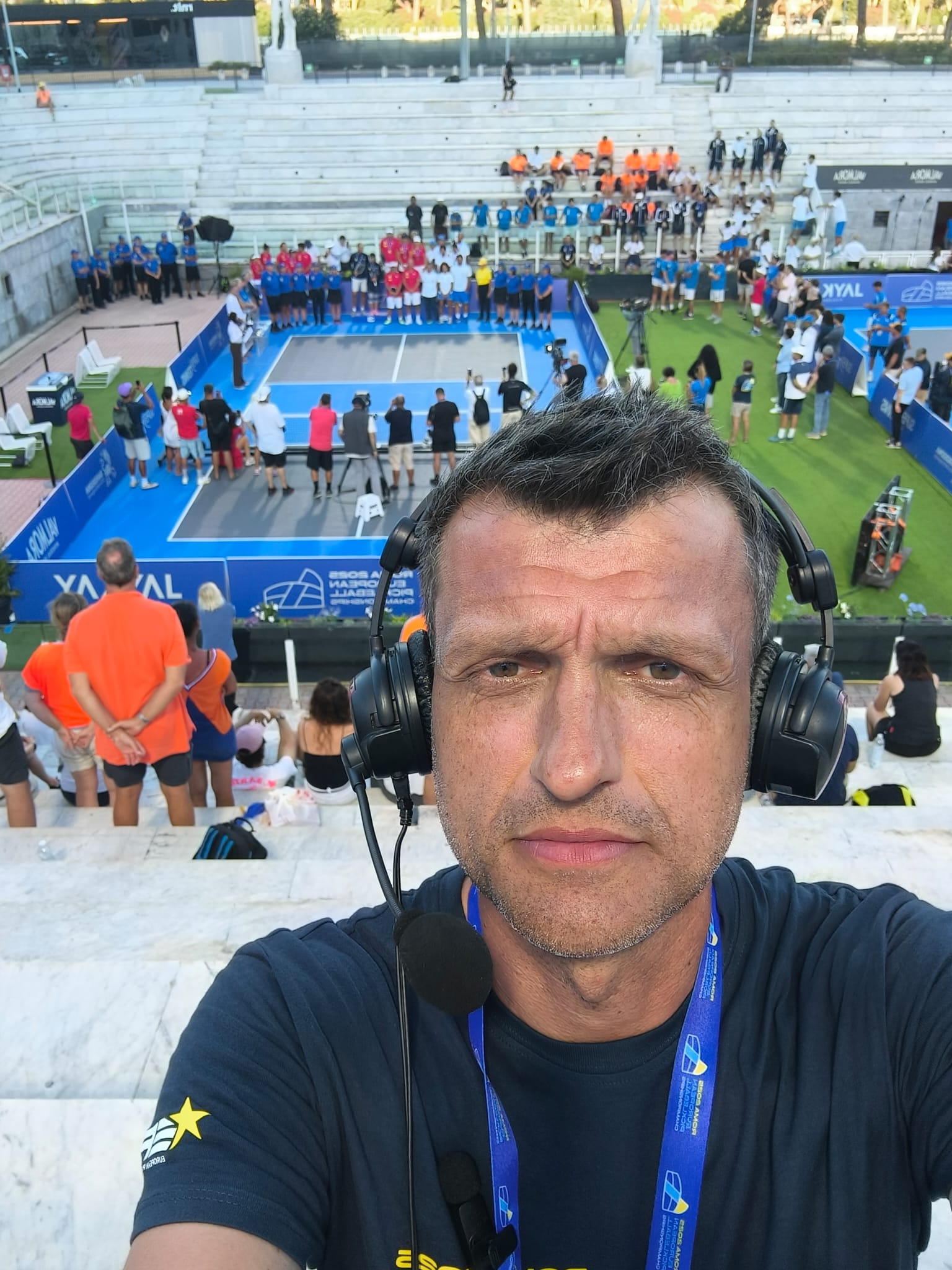
Founder and Editor-in-ChiefChris Beaumont is the founder and Editor-in-Chief of World Pickleball Magazine. Chris follows the global game closely, reporting on the latest news, developments, stories and tournaments from all five continents. He also hosts the World Pickleball Podcast, interviewing people at…
View All Articles →