Industry
The pickleball industry has entered a period of rapid structural expansion, transforming from a recreational marketplace into a global commercial ecosystem. Participation growth, once the primary driver of attention, is now being matched by professional competition, sponsorship investment, facility development, equipment innovation, and expanding media coverage. Together, these forces are redefining pickleball as both a sport and an industry with long-term economic significance.
Commercial maturity is most visible in regions where participation has reached critical mass. Professional tours are securing broadcast partners, major brands are committing to multi-year sponsorship agreements, and dedicated venues are being built to support year-round programming. Equipment manufacturers continue to innovate across performance and price categories, while service providers—from coaching platforms to event operators—are forming an interconnected marketplace around the sport. This layered commercial structure mirrors the development patterns seen in other racket sports during their transition to global prominence.
Facility investment sits at the centre of this transformation. Indoor complexes, multi-court outdoor venues, and hybrid recreation centres are appearing in urban and suburban markets worldwide. These facilities function not only as places to play, but as community hubs capable of hosting leagues, tournaments, coaching programmes, and social events. Sustainable facility economics are increasingly recognised as essential to long-term industry stability, linking participation directly to recurring revenue models.
Sponsorship and brand engagement continue to accelerate alongside infrastructure. Pickleball’s demographic breadth—spanning youth competitors, working-age adults, and older recreational players—creates unusual commercial appeal. This diversity enables partnerships across performance equipment, apparel, lifestyle products, travel, health, and consumer services. As broadcast distribution and digital streaming expand the sport’s visibility, sponsors are gaining access to audiences that extend well beyond local courts.
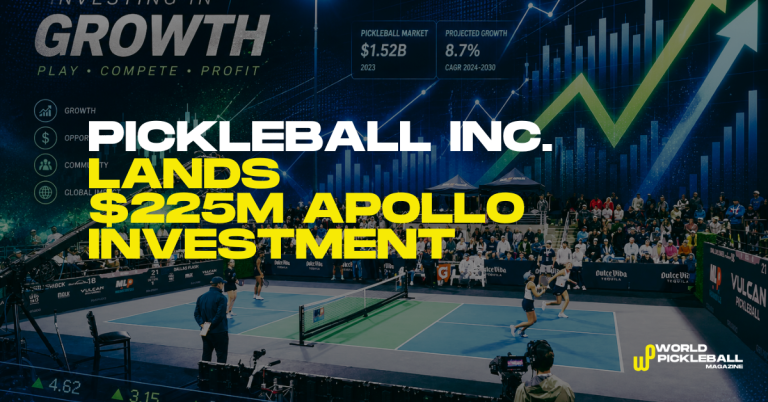
Investment interest is following the same trajectory. Private capital, sports ownership groups, and venture-backed startups are exploring opportunities across professional leagues, technology platforms, analytics tools, and facility networks. While the professional landscape is still evolving, the underlying fundamentals—accessibility, participation growth, and international expansion—continue to signal long-term commercial potential. Strategic investment decisions made during this formative period are likely to shape the competitive and governance structure of the sport for decades.
At the same time, structural challenges remain. Calendar alignment between tours, sustainable prize money distribution, governance coordination, and player compensation models are all active areas of development. How the industry resolves these questions will determine whether pickleball’s growth consolidates into a stable global system or fragments across competing commercial interests.
This hub tracks the full business landscape of pickleball worldwide, bringing together coverage of sponsorship, facilities, investment, media, technology, and professional competition economics. By examining the commercial forces behind the sport, it provides context that extends beyond match results and rankings.
As pickleball continues its transition from participation boom to institutional permanence, the evolution of its industry will define the scale, stability, and global reach of the sport’s future.