

Fernando Piazzese opened the bag and started laughing.
He had asked for padel balls.
Instead, his friend had brought back something else from Miami: solid paddles and a handful of plastic balls covered in holes.
Key Takeaways
- Pickleball arrived in Argentina almost by accident — but a grassroots movement quickly turned casual interest into organised community growth.
- Argentina’s pickleball scene is being shaped by local players rather than outside organisations, creating an authentic foundation for long-term development.
- The movement shows how pickleball can take root in South American sporting culture alongside padel and tennis.
Nobody in the room had heard of pickleball.
At that moment, it didn’t exist in Argentina.
A Sport That Didn’t Exist — Yet
That mattered.
Padel wasn’t just popular. It was everywhere. Courts were full, schedules tight, and players serious. Piazzese’s club, La Chimenea, was built around that culture.
There were no pickleball courts. No nets. No lines.
So they made it up.
They taped out a court on a padel surface and started hitting.
What happened next was immediate.
The sound. The pace. The way points unfolded.
Within minutes, the joke had turned into something else.
Within days, they were playing for six or seven hours at a time, teaching themselves a sport they had never seen before.
👉 Pickleball rarely arrives fully formed.
👉 It starts like this.
The Moment Everything Changed
Three months later, the outside world arrived.
Corinne Carr, then ranked third in the world, was travelling through Argentina and searching for somewhere to play.
She found La Chimenea.
What she found was a group of players who could strike the ball, but didn’t yet understand the game.
So she stayed.
Every day.
She introduced structure. Tactics. Positioning. The soft game.
And just like that, the experiment became something more serious.
And Then It Got Out of Control
One Sunday, someone suggested hosting a tournament.
Piazzese laughed again.
It wasn’t a joke this time.
A single Instagram post later, the Brazilian Pickleball Association confirmed they were sending fifteen mixed doubles teams.
Argentina had six players.
All of them men.
They scrambled.
Recruited players from a nearby tennis club. Explained the rules on the spot. Built something that didn’t exist.
If you’re following how the global game is shifting week by week, the World Pickleball Report breaks this down every Wednesday.
And still, the tournament happened.
👉 That’s not planning.
👉 That’s momentum.
From Tape to Structure
Today, pickleball in Argentina is no longer improvised.
It is still grassroots. Still fragile in places. But it is real.
Courts now exist across Buenos Aires. Communities are forming. Players are training seriously.
Piazzese is now the national team’s first official coach, running structured sessions and guiding new players into the game.
And beyond the capital, the sport is spreading.
- Tucumán
- Córdoba
- Santa Fe
- Mar del Plata
👉 Once it starts, it doesn’t stay in one place.
The Real Challenge
The barriers remain.
Padel is still dominant. Tennis still pays. Facilities are still limited.
There is no immediate financial upside.
But that hasn’t stopped it.
Because in Argentina, pickleball isn’t being built as a business.
It’s being built as a community.
The People Carrying It Forward
Figures like Silvia Tomarrello are converting courts and pushing youth development.
Others are introducing the sport into schools, trying to ensure the next generation doesn’t discover pickleball by accident, but grows up with it.
And for many, the game has become something else entirely.
A reason to connect. To train. To belong.
More Than Just a Local Story
What’s happening in Argentina isn’t unique.
But it is revealing.
👉 This is how pickleball grows outside the United States.
👉 Not through investment first. Through people.
Closing Thought
Piazzese still travels long distances each week to teach new players.
There is little money in it.
No guarantees.
Just the belief that someone new will pick up a paddle and feel what he felt.
And if that happens often enough, in enough places, with enough people willing to tape lines onto courts and figure it out as they go…
Then the sport doesn’t need to arrive anywhere.
It builds itself.
This article appeared in the April 2026 issue of World Pickleball Magazine.
If you want the full breakdown, including deeper analysis, additional insights, and exclusive content, you can download the full April issue of World Pickleball Magazine here:
Further Reading
- Latest pickleball news from around the world
- Tournament coverage and results
- Rankings and player profiles
- Regional pickleball coverage
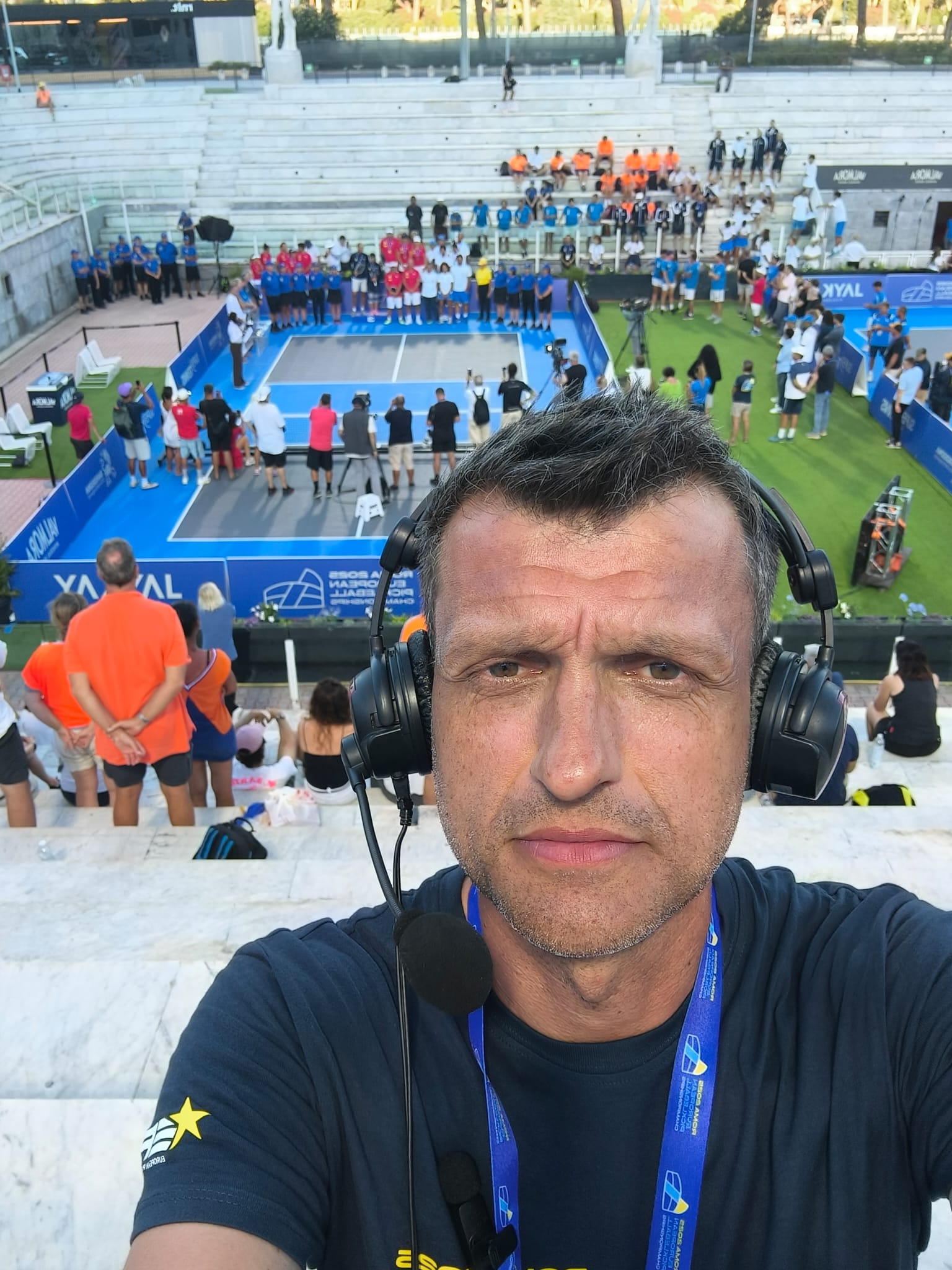
Chris Beaumont
Founder and Editor-in-ChiefChris Beaumont is the founder and Editor-in-Chief of World Pickleball Magazine. Chris follows the global game closely, reporting on the latest news, developments, stories and tournaments from all five continents. He also hosts the World Pickleball Podcast, interviewing people at…
View All Articles →