Before the crowds, before the broadcasts, before the sport knew how to scale, someone had to make it work.
By Chris Beaumont
For about twenty minutes, everything stopped. No draws. No match calls. No system. At the US Open, running more than a hundred matches an hour, the tournament software went down completely.
For most operators, that is the moment things fall apart.
Melissa McCurley picked up the microphone. She told the players there would be a slight delay. Nothing dramatic. Matches would keep moving. Just a little slower.
Key Takeaways
- Melissa McCurley grew PickleballTournaments.com from 93 tournaments and 10,000 players to over 1,200 events and 200,000 players before stepping away in 2023.
- A US Navy veteran and corporate IT professional, McCurley brought crisis-management experience that helped build the operational backbone of professional pickleball.
- Now Executive Vice President of Competition at the APP Tour and a 2025 Pickleball Hall of Fame inductee, she continues shaping the sport’s structure and future.
Inside, she says, it felt like chaos. Outside, she stayed calm. Broke the event down into sections. Handed brackets to anyone who could help. Ran it manually until the system came back.
Most people barely noticed.
Before Pickleball, There Was Pressure
Long before she ever touched PickleballTournaments.com or stepped into a commentary booth, McCurley had already lived through environments where failure meant something real.
She served as a United States Navy Hospital Corpsman during Operation Desert Storm. After that came nearly two decades in corporate IT, including work with Hewlett Packard, American Express and EDS.
Her career placed her inside moments most people only read about. The Navy’s Crisis Response Center after 9/11. Emergency communications after Hurricane Ivan. Work around Hurricane Katrina.
So when she later found herself dealing with rain delays, scheduling chaos or a server crash at a pickleball tournament, the scale felt different. Pickleball was not stress-free. But it was something she knew how to manage.
If you’re following how the global game is shifting week by week, the World Pickleball Report breaks this down every Wednesday.
A Driveway Game That Did Not Stay Small
Her introduction to the sport was as modest as it gets. A family Christmas in Texas. A pickleball set brought along by a relative. A net stretched across a driveway. Shop lights pulled out when it got dark.
The shift came later, after a move to Arizona. A tennis teammate mentioned that her father was a national pickleball champion. McCurley went to see a tournament. What she found was not a backyard game. It was a sport with structure, players, competition, and just enough organisation to hint at something bigger.
That changed in 2014. She and her brother Greg bought PickleballTournaments.com. At the time, it supported 93 tournaments and roughly 10,000 players. By the time she stepped away in 2023, it was handling more than 1,200 events and over 200,000 players.
More Than Software
McCurley thought she was buying a piece of software. What she actually stepped into was something much larger.
Tournament directors did not just want a platform. They wanted help. They wanted systems. They wanted someone to handle registration, scheduling, bracketing, and the thousand small details that decide whether an event feels smooth or chaotic.
Along the way, McCurley also helped co-create the USA Pickleball Tournament Player Rating system. It was the sport’s first attempt at an objective, algorithm-driven rating structure. It was not perfect. But it moved the game forward.
That pattern shows up again and again in her work. Not perfection. Progress.
The US Open and the Moment the Sport Grew Up
If PickleballTournaments.com built the infrastructure, the US Open gave the sport a stage. From the first event in 2016, it felt different. Larger. More ambitious. More deliberate.
McCurley worked alongside founders Chris Evon and Terri Graham, helping deliver the operation behind the scenes.
It also brought pickleball to national television. McCurley still remembers seeing the CBS equipment hanging over centre court for the first time.
Finding Her Place on the Microphone
The move into broadcasting came almost by accident. After the first US Open, the organisers asked her who should commentate the event going forward. Their answer was simple. She should.
She became the first woman to commentate pickleball on national TV. She knew the players. She knew their stories. She knew the numbers. She understood what mattered and what did not.
Recognition, and What It Actually Means
In 2025, McCurley was inducted into the Pickleball Hall of Fame as a contributor. On paper, it made complete sense. In reality, it still caught her off guard.
There is a pattern in how she talks about moments like that. She does not describe them as achievements in the usual way. Instead, she talks about the work itself. Waking up early. Solving problems. Helping people. Moving things forward.
Back in the Sport, and Looking Ahead
After stepping away, she did not stay away for long. In 2024, she returned as Executive Vice President of Competition for the APP Tour.
She talks about amateur experience. Development pathways. Giving younger players the structure they need to grow properly, not just physically, but mentally. It is not about quick wins. It is about building something that lasts.
The future, she says, cannot ignore the past. There is a danger, as new people enter the sport, that the history gets lost. At the same time, she is clear that the early generation cannot simply resist change.
The People Who Make It Work
There are always players at the front of a sport. They win titles. They drive attention. They shape how the game looks.
But behind that, there are people who make sure everything holds together. Melissa McCurley is one of those people.
She did not arrive with a plan to shape pickleball. She arrived because something pulled her in, and she followed it. What she built, piece by piece, helped the sport grow up.
And even now, with a Hall of Fame place secured, she still talks less about what she has done and more about what the sport needs next. That tells you everything.
This article appeared in the April 2026 issue of World Pickleball Magazine.
If you want the full breakdown, including deeper analysis, additional insights, and exclusive content, you can download the full April issue of World Pickleball Magazine here:
Further Reading
- Latest pickleball news from around the world
- Tournament coverage and results
- Rankings and player profiles
- Regional pickleball coverage
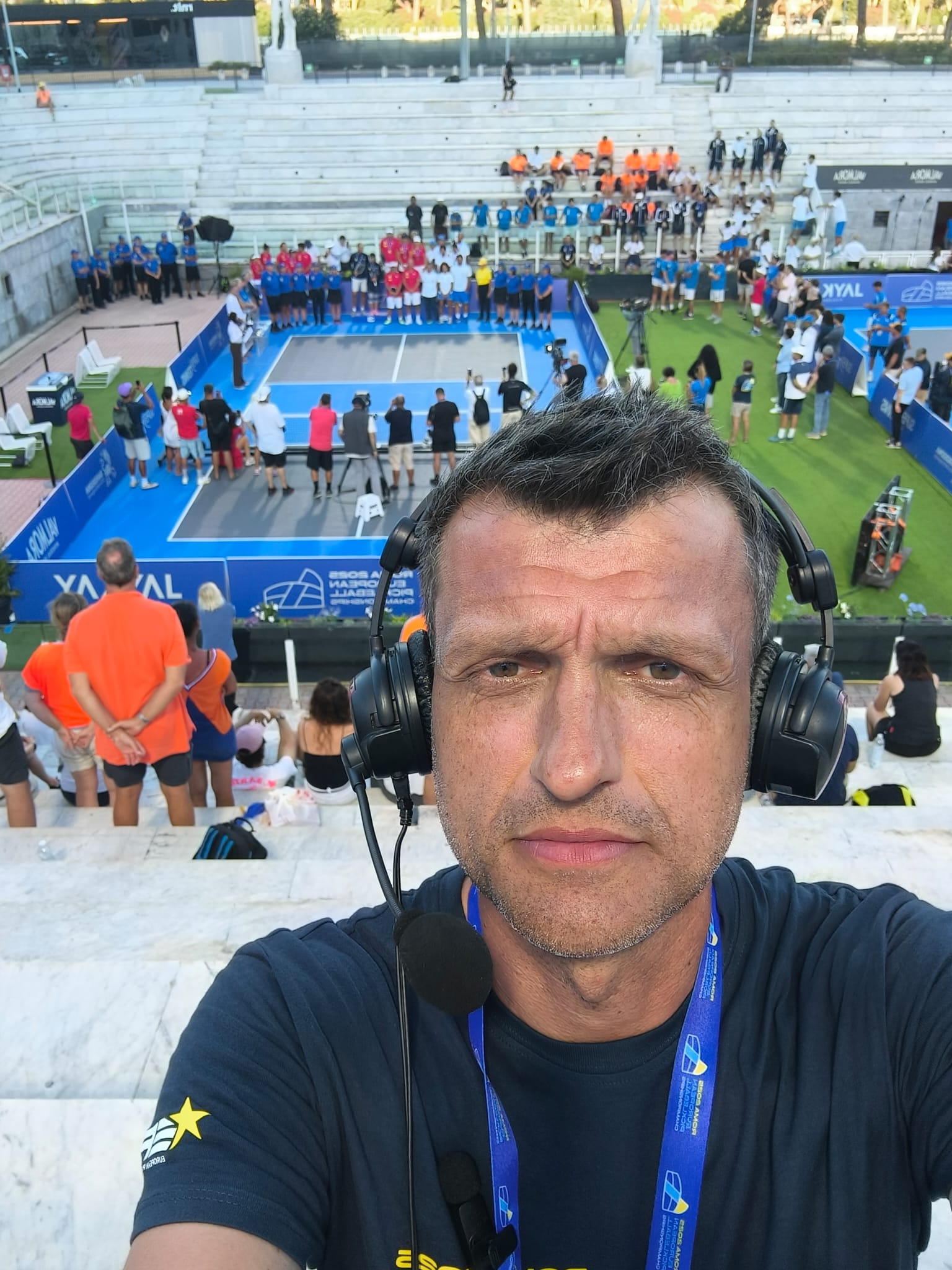
Chris Beaumont
Founder and Editor-in-ChiefChris Beaumont is the founder and Editor-in-Chief of World Pickleball Magazine. Chris follows the global game closely, reporting on the latest news, developments, stories and tournaments from all five continents. He also hosts the World Pickleball Podcast, interviewing people at…
View All Articles →