

March did not just show that junior pickleball is growing.
It showed how quickly the level is rising with it.
Across three PPA Tour stops, Newport Beach, Texas, and Utah, more than 300 junior players competed. That alone matters.
- More than 300 junior players competed across three PPA Tour stops in March
- Match quality, depth, and competitiveness are rising quickly
- The junior circuit is evolving into a true competitive pathway
But the numbers only tell part of the story.
What stood out was the quality. The depth. And how often matches refused to follow expectations.
The scale is real
Across the month:
Newport Beach Open → 106 juniors
Veolia Texas Open → 109 juniors
Greater Zion Cup → 108 juniors
Consistent turnout across events.
Not a one-off spike.
Quick Take
300+ junior players in one month
Multiple divisions filled at every stop
Repeat names appearing across draws
👉 This is no longer early-stage participation.
👉 This is a competitive circuit.
If you’re following how player pathways are evolving across the sport, the World Pickleball Report breaks this down every Wednesday.
Newport Beach: setting the tone
The month opened in California, and immediately the standard was clear.
In Boys 18U Singles, Maverick Messinger delivered one of the most dominant performances of the month, defeating Jaxton Bush 11-1, 11-0.
But dominance was not the only story.
Myda Pham edged a tight Girls 14U Singles final (14-12, 11-6)
Rex Thais / Nicklaus Vu recovered from a first-game loss to take the Boys 16U Doubles title
JZ Holmes and Gal Solomon showed early signs of a strong partnership in Mixed 12U
From the first event, it was clear.
Matches were not being handed out.
They were being earned.
Texas: depth and pressure
Key Takeaways
- The Junior PPA Tour level is rising rapidly, with younger players arriving better prepared and more competitive than ever before.
- Winning at the junior level is getting harder as structured training programmes and development pathways mature.
- The junior pipeline is directly feeding the professional game, creating a generation of players who have grown up inside competitive pickleball.
By the time the tour reached Texas, the fields were not just full.
They were competitive.
In Boys 14U Singles, Leo Chun held firm to take gold, while in the 18U division, George Wolf recovered from an early setback to claim his second title of the year.
Doubles brought the closest margins.
Wisner / Slowinski came from behind in a three-game final
James Wolf / MJ Fermin closed out a tight 16-14, 11-9 win
These were not comfortable victories.
They were controlled under pressure.
This increasing competitiveness is becoming a defining theme across junior tournament coverage and the wider competitive structure.
Pattern emerging
Across Newport and Texas:
Players appearing repeatedly in later rounds
More three-game matches
More comebacks
👉 The gap between players is shrinking
👉 Matches are lasting longer
Utah: results start to turn
At the Greater Zion Cup, the most important shift appeared.
Results became less predictable.
Top seeds were pushed, and in some cases, beaten.
Bennett Miller / Jett Barber overturned favourites Leo Chun / Adym Pham in Boys 14U Doubles
Sunny Stephens edged a three-game battle in Girls 12U Singles (12-10 in the decider)
Gal Solomon responded immediately, taking Mixed 12U gold
Elsewhere:
Nicklaus Vu added the Boys 18U Singles title
CC Eleven Sacca / Natalia Simson dominated the Girls 18U Doubles final
The same names are still there.
But the outcomes are no longer guaranteed.
More than results
What stood out across the month was not just who won.
It was how players are approaching the game.
Player Focus
Ella Oh
Started playing to build confidence in a new environment.
Now competing across multiple age groups and embracing pressure.
Ellie Rodriguez
Discovered the sport through a family tournament.
Now medalling at national events, while still pointing to the community as the biggest draw.
These are not isolated stories.
They reflect something broader.
Players are entering the sport for different reasons.
But staying because the level, and the environment, keeps pulling them forward.
This broader development is reflected across pickleball analysis, where the focus is shifting toward long-term player progression.
Where the junior game is now
March did not produce a single dominant junior.
It produced something more important.
A field that is tightening.
More players capable of deep runs
More matches decided late
More resilience required to win
The best juniors are still winning.
But they are being pushed harder to do it.
Closing thought
Junior pickleball is no longer about getting on court.
It is about staying there.
Competing. Adjusting. Closing matches under pressure.
And if March is any indication, the next wave of players will arrive already used to that level.
If you want the full breakdown of how the next generation is developing, along with deeper insights and additional coverage, you can download the full April issue of World Pickleball Magazine here:
Download the April 2026 issue of World Pickleball Magazine
Further Reading
- Latest pickleball news from around the world
- Tournament coverage and results
- Rankings and player profiles
- Regional pickleball coverage
This article appeared in the April 2026 issue of World Pickleball Magazine.
If you want the full breakdown, including deeper analysis, additional insights, and exclusive content, you can download the full April issue of World Pickleball Magazine here:
Further Reading
- Latest pickleball news from around the world
- Tournament coverage and results
- Rankings and player profiles
- Regional pickleball coverage
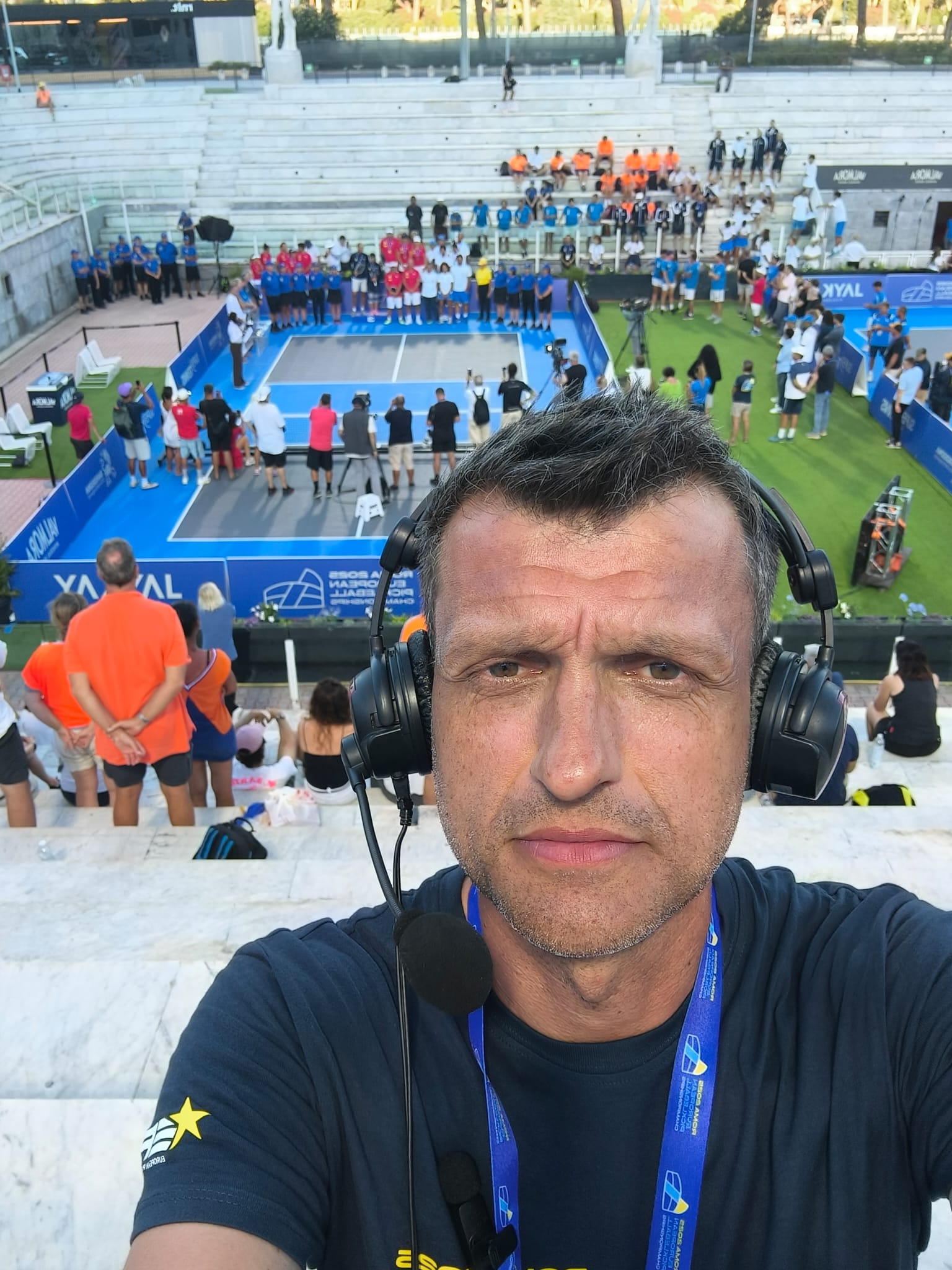
Chris Beaumont
Founder and Editor-in-ChiefChris Beaumont is the founder and Editor-in-Chief of World Pickleball Magazine. Chris follows the global game closely, reporting on the latest news, developments, stories and tournaments from all five continents. He also hosts the World Pickleball Podcast, interviewing people at…
View All Articles →