For long stretches, Hanoi looked exactly as expected. The top names were in control. The structure held. The results followed a familiar script.
Then it stopped behaving.
Because what unfolded across the week was not just a tournament playing out. It was a system being tested in real time. And not everything held.
Key Takeaways
- The MB Hanoi Cup produced the first all-Vietnamese men’s singles final on the PPA Asia circuit, signalling a normalisation of local competitiveness at the highest level.
- Kaitlyn Christian’s comeback — saving match points from 2-8 down — demonstrated that control at the top is no longer guaranteed.
- Vietnam’s leading player Phuc Huynh withdrew before the tournament over exclusivity rules and draw construction, exposing the tension between global structure and local realities.
The Result Everyone Saw
The headline moments were clear. Kaitlyn Christian produced the kind of comeback that should not exist at this level. A set down, trailing 2-8, facing match points, the final was already gone.
She took it back anyway. Saving match points at 11-10 and 12-11, forcing a decider, then overturning a 4-9 deficit with seven unanswered points, this was not control. It was refusal.
On the men’s side, there was less drama but more significance. Hoang Nam Ly beat Hien Truong 11-5, 11-6 in the first all-Vietnamese men’s singles final on the PPA Asia circuit.
There was no sense of a breakthrough moment being seized. It felt settled. Almost routine.
That matters more. Because the story of Hanoi is not that a home player won. It is how normal it started to look.
The Structure That Still Holds
Elsewhere, the expected order remained intact. Anna Leigh Waters and Anna Bright controlled women’s doubles. Ben Johns and Gabriel Tardio took men’s doubles, before Johns added mixed gold alongside Waters.
That part of the sport still has shape. It still belongs to established partnerships, built systems, and repetition under pressure.
But even within that, there were quieter signals. Waters, the defining player in the women’s game, did not compete in singles. Her focus stayed on doubles and mixed, the formats where structure is strongest and outcomes remain most predictable.
It is a small detail. But it fits the larger pattern. Because right now, the sport is not shifting everywhere. It is shifting in specific places first.
If you’re following how the global game is shifting week by week, the World Pickleball Report breaks this down every Wednesday.
Where It Is Actually Moving
That place is singles. Hanoi did not produce an isolated result. It confirmed a trend that has been building across the global tournament calendar.
The gap is narrowing. Not in theory. In outcomes.
Vietnam placing two players into the final was not a surprise run built on emotion. It was controlled, repeatable, and earned through matches that did not drift.
And once that becomes normal, the old assumptions stop holding.
The Tension Beneath It
But Hanoi was not just shaped by what happened on court. It was shaped by who was not there.
Vietnam’s leading player, Phuc Huynh, withdrew before the tournament, citing concerns over exclusivity rules and the way the draw had been constructed.
His issue was not abstract. Despite holding a global ranking that should have placed him directly into the main draw, Huynh was required to qualify, while other players without ranking points were placed straight into the bracket.
That combination is difficult to ignore. In established systems, decisions like that are absorbed. In emerging markets, they are exposed.
Because this is where global structure meets local reality. And the fit is not always clean.
One Vietnamese player stepped away from the system. Two others played their way through it. That contrast sits at the centre of what Hanoi really was.
What This Week Actually Means
For years, pickleball’s expansion has been framed as opportunity.
Hanoi suggested something else. It showed what happens when growth reaches a point where results, structure, and control no longer move in the same direction.
The established order still exists. But it no longer applies everywhere. Not evenly. Not automatically.
And not without resistance. As covered in the April 2026 issue of World Pickleball Magazine, this tension between global structure and regional independence is becoming one of the defining dynamics of the sport’s next phase.
Hanoi did not produce an upset. It exposed how close the rest of the world is getting. And how much harder it will be to keep the sport contained to what it used to be.
If you want the full breakdown, including deeper analysis, additional insights, and exclusive content, you can download the full April issue of World Pickleball Magazine here:
Download the April 2026 issue of World Pickleball Magazine
Further Reading
- Latest pickleball news from around the world
- Tournament coverage and results
- Rankings and player profiles
- Regional pickleball coverage
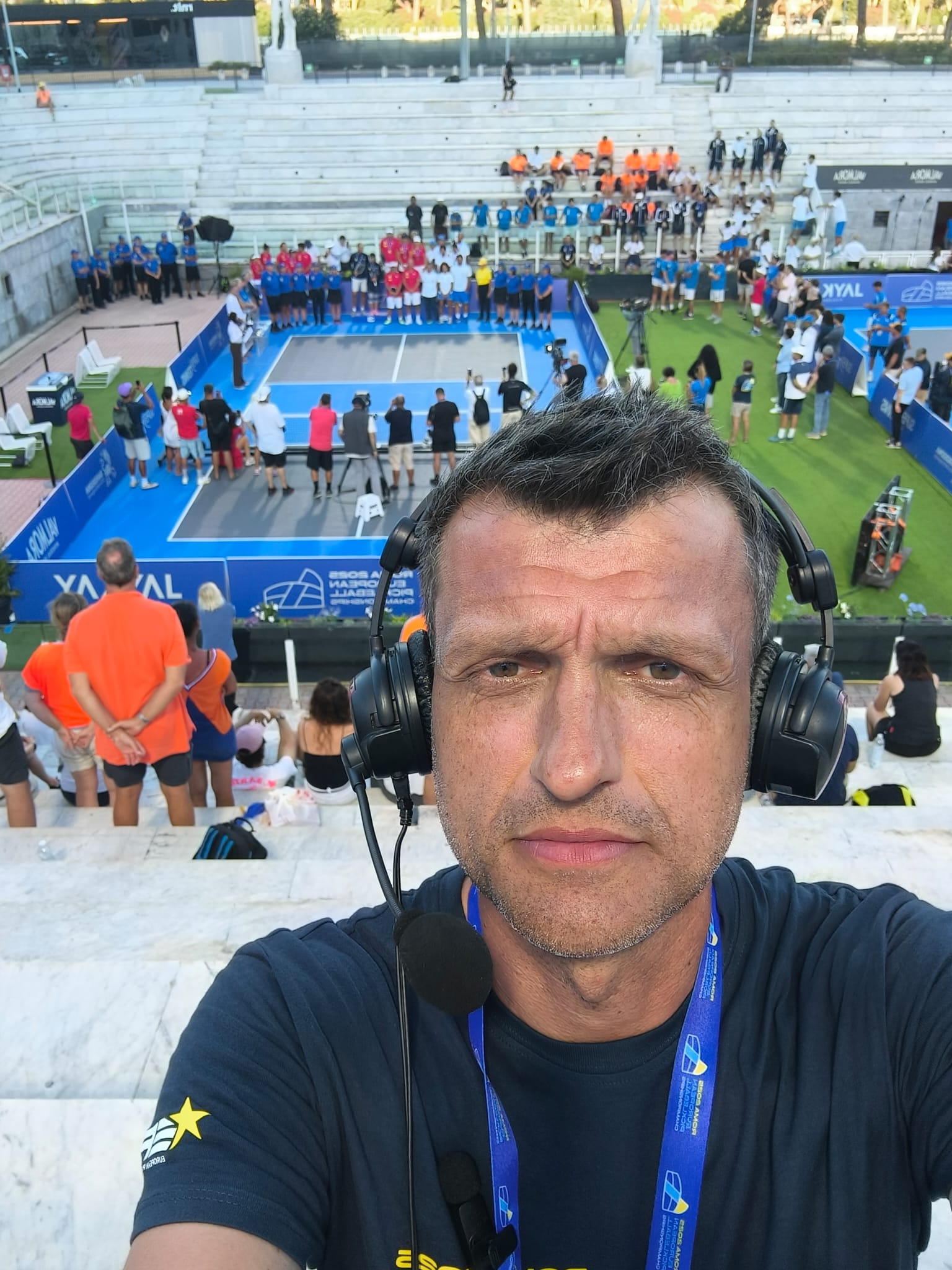
Chris Beaumont
Founder and Editor-in-ChiefChris Beaumont is the founder and Editor-in-Chief of World Pickleball Magazine. Chris follows the global game closely, reporting on the latest news, developments, stories and tournaments from all five continents. He also hosts the World Pickleball Podcast, interviewing people at…
View All Articles →