Every rally demands anticipation, positioning, and instant reaction. Yet beneath the visible movement lies something even more decisive: a rapid internal calculation that answers one simple question.What shot should I hit right now?
In less than a third of a second, the brain evaluates angles, balance, opponent movement, spin, and partner position.
Understanding this hidden process is essential for players learning how pickleball strategy truly works at higher levels.
Why Doubles Feels Mentally Faster Than Singles
Singles asks you to read space. Doubles asks you to read systems.
- Four moving players to track
- Shared middle responsibility
- Tighter non-volley zone exchanges
- Faster volley chains
- Constant partner coordination
These layers explain why pressure affects shot choices late in games more dramatically in doubles than singles.
What a Decision Tree Looks Like on Court
In psychology, a decision tree is a branching set of choices shaped by incoming information.
In pickleball, this process happens subconsciously during every rally.
Example scenario: Opponent drives to your backhand in mid-court.
- Ball above net height → attack, block, or counter
- Ball below net height → drop or reset
- Balanced stance → roll, angle, or pressure
- Off-balance → neutral dink or defensive lob
Experienced players feel these options instantly rather than thinking through them step by step.
This is closely tied to procedural memory in sport performance, where repeated movement patterns become automatic.
The Neuroscience Behind Shot Selection
Pattern Recognition Builds Speed
Through repetition, the brain stores visual-motor patterns:
- The visual cortex reads trajectory and body cues
- The cerebellum matches patterns to past outcomes
- Conscious thought is bypassed for automatic response
This is why elite players appear calm in chaos. Their brains are recognising, not analysing.
Working Memory Limits Force Simplicity
Humans can only process a small number of variables at once. Strong players simplify decisions into familiar patterns.
A beginner asks which shot to hit.
An advanced player already knows.
How the Brain Prioritises the Right Shot
1. Instinctive Risk-Reward Judgement
Players subconsciously evaluate:
- Probability of success
- Potential damage to opponents
- Recovery position after contact
2. Body Position Dictates Options
- Balanced → full attacking menu
- Leaning or late → safe neutral options only
This connects directly to why court positioning shapes every rally.
3. Reading Opponent Micro-Cues
Elite players constantly scan paddle height, shoulder angle, and weight distribution to adjust decisions in real time.
Common Decision Trees in Real Doubles Play
NVZ Dink Exchange
- High ball → speed-up opportunity
- Opponent leaning → disguise and drop
- Partner stretched → reset middle
Third-Shot Phase
- Deep fast return → drop preferred
- Shallow return → drive and advance
- Stacked opponents → attack weaker side
Defensive Reset Mode
- Both opponents forward → drop to feet
- One opponent back → apply short pressure
- Pulled wide → lob to recover
Why Communication Shapes Decision Quality
Your brain is never deciding alone in doubles. It constantly checks partner movement, coverage habits, and positioning.
Aligned teams create cleaner middle control and earlier poaches.
Misaligned teams create hesitation before the ball is even struck.
Why Players Choose the Wrong Shot
- Cognitive overload during fast exchanges
- Emotional carry-over from previous rallies
- Habit replacing awareness
Great players mentally reset after every shot. Average players replay the last mistake.
Training Faster, Smarter Decisions
- Repeat short rally patterns with feedback
- Pause match footage to predict next shots
- Drill partner scenarios to build shared instincts
- Use constraint games to sharpen choices
Improvement comes from simplifying recognition, not adding complexity.
From Chaos to Clarity
Every doubles rally is a chain of silent decisions.
The best players are not guessing. They are recognising.
Through repetition, balance, and awareness, chaos becomes control.
And in the fraction of a second between bounce and contact, clarity becomes the real competitive edge.
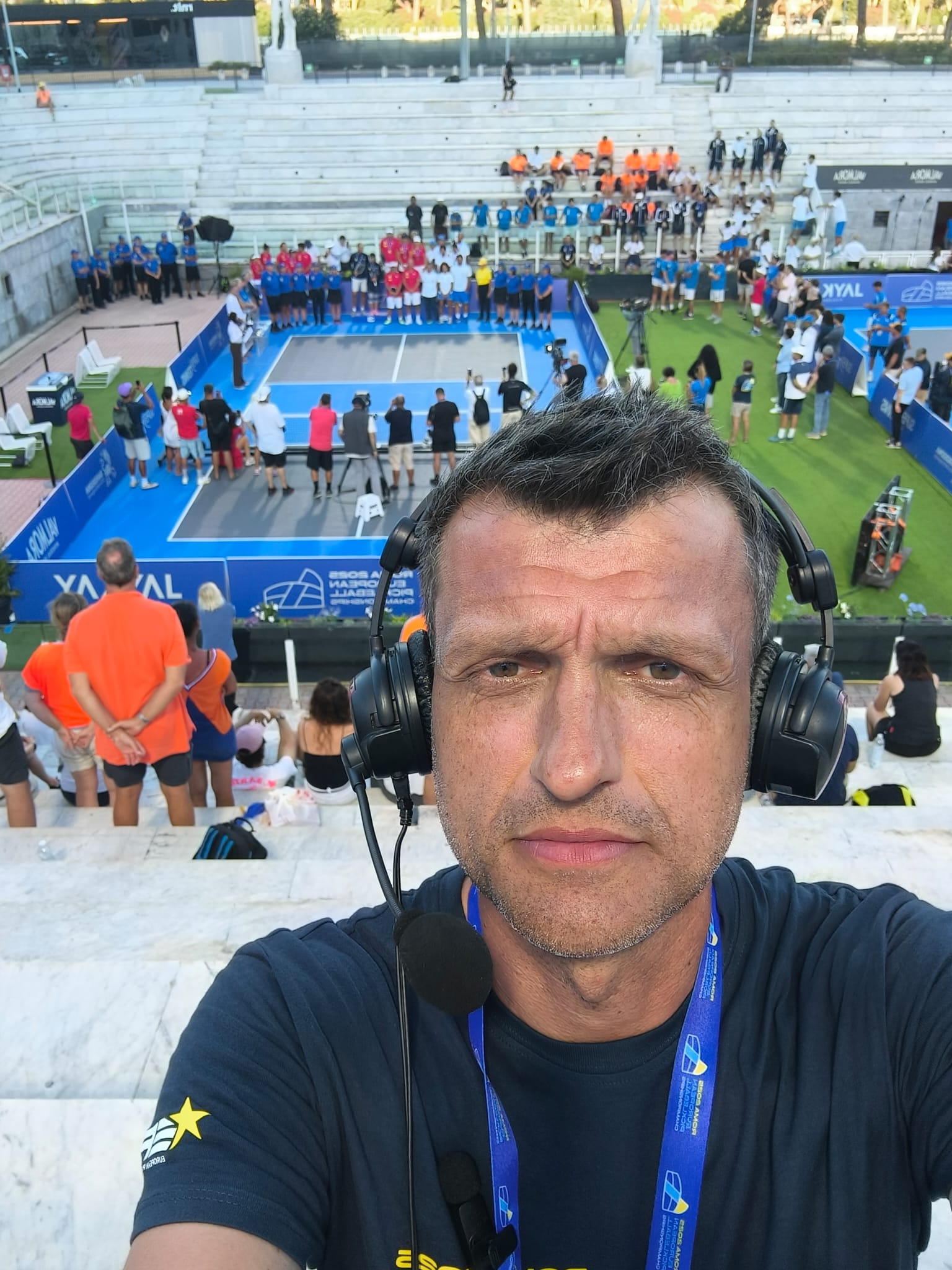
Chris Beaumont
Founder and Editor-in-ChiefChris Beaumont is the founder and Editor-in-Chief of World Pickleball Magazine. Chris follows the global game closely, reporting on the latest news, developments, stories and tournaments from all five continents. He also hosts the World Pickleball Podcast, interviewing people at…
View All Articles →