
Why Most Pickleball Players Avoid Watching Themselves (And Miss Out on Fastest Improvement)
Most pickleball players say they want to improve. Then they avoid the one tool that shows them the truth in ten minutes.
Video does not just reveal technique. It reveals timing, positioning, decision-making, and the moments where you stop playing the point and start playing your own thoughts.
People avoid watching themselves because it feels uncomfortable. That discomfort is often the price of fast clarity.
Core Section
There are three common reasons players avoid video, and none of them are about time or equipment.
1) Identity discomfort.
You carry a picture of yourself as a player. “I’m steady.” “I’m a smart dinker.” “I don’t panic.” Video can challenge that picture quickly. It can show that you rush when the score tightens, that your feet stop moving after the third shot, or that your paddle drops at the kitchen. It feels personal, even when it is simply information.
2) Fear of looking bad.
In many UK club settings, there is a social layer to everything. Being seen to care too much can feel awkward, especially if you are filming in a leisure centre with mixed groups and a queue for courts. But improvement is not a performance for others. It is a private process done in public. Serious players respect serious habits, even when they joke about it.
3) Not knowing what to look for.
If you do not have a simple checklist, video becomes a judgement session. You end up thinking, “I look clumsy,” or “My swing is ugly,” and you miss what actually decides points: spacing, lane ownership, shot selection, and the patterns that create your errors.
The solution is to make video small, practical, and specific. You do not need perfect footage. You need repeatable footage and a clear review method.
If you are still building a base understanding of positioning and rules, start with what pickleball is, then come back here and use video as your improvement multiplier.
Applied Strategy
Here is the approach that works for real players with real lives: film little, review fast, change one thing.
Use a three-part loop:
1) Capture (10 minutes)
2) Diagnose (10 minutes)
3) Convert (20 minutes on court)
When you do this once a week, your improvement compounds. You stop guessing. You stop “feeling” that you played well. You start seeing exactly why you win and why you lose.
Step 1: Capture the right ten minutes.
Film one game to 11, or even the first ten minutes of a session. Early rallies are often the most honest because you are not yet “in rhythm,” which is exactly when your habits show up.
Best angle: behind the baseline if possible. You want spacing and lanes, not close-up hands. If you can only film from the side, that is fine, but keep the angle consistent week to week.
Step 2: Diagnose with a checklist, not emotion.
This is where most people go wrong. They watch like a critic. You must watch like a coach.
Use this “Four Bucket” checklist.
Bucket A: Free points you gave away.
Count them. Do not explain them yet. Just count.
• missed returns
• serve errors
• unforced pop-ups at the kitchen
• rushed speed-ups into the net
• wide balls under no pressure
Bucket B: Positioning errors.
Pause the video when the opponent strikes the ball. Ask:
• Am I in an athletic position, or upright and waiting?
• Are we arriving at the kitchen together, or staggered?
• Am I protecting a lane, or floating?
• Is the middle covered with paddle and feet, or only with hope?
Bucket C: Decision errors.
These are the choices that create the mistakes. Look for:
• speeding up from below net height
• trying for low-percentage lines at 9–9 or 10–10
• taking a volley you should reset
• attacking the wrong opponent (or the wrong side)
Bucket D: Repeated patterns.
This is the gold. One pattern can explain ten points. Examples:
• you back up after every dink exchange
• you reach rather than move your feet
• you drift into the middle, then get burned down the line
• your paddle drops every time the opponent loads up to speed up
This diagnostic layer connects directly to your broader tactical content. When readers need help interpreting what they see, send them into tactics. When they need a structured improvement plan, send them into coaching. If they are still learning the fundamentals, anchor them with Learn Pickleball.
Step 3: Convert what you saw into one change and one drill.
The simplest rule is the best one: one clip, one correction, one drill.
Here are three common video discoveries and the correct conversions:
Discovery 1: “I keep popping up resets.”
Likely cause: you are contacting too close to your body, lifting the ball, and trying to do too much under pace.
Conversion: practise resets with a rule that pop-ups do not count. Start with slower pace, then increase.
Discovery 2: “I’m late at the kitchen and get jammed.”
Likely cause: you are reacting on contact, not on cues. Your feet are quiet until it is too late.
Conversion: practise cue-based movement. Move when you see the opponent’s shoulder and paddle face, not after the ball has travelled.
Discovery 3: “I speed up bad balls when I’m nervous.”
Likely cause: impatience plus fear of losing the rally slowly.
Conversion: play constraint games where low speed-ups lose the point. You will learn to earn attacks instead of forcing them.
That is how video becomes a weekly system rather than a one-off humiliation ritual.
Match Scenarios That Video Exposes Fast
Video is brutal in a useful way. It shows what you are doing when you think you are doing something else.
Scenario 1: The “9–9 rush”.
In UK club matches, 9–9 is where many points are donated. On video, you often see a player abandon patience, speed up a low ball, and lose immediately. The fix is not “be calmer.” The fix is to build a rule for yourself: at 9–9, you only speed up if the ball is above net height and you have a body target.
Scenario 2: The staggered arrival.
One player reaches the kitchen, the other is two steps behind. The front player feels exposed and either backs up or forces an attack. The back player feels pressured and drives a third shot too hard. Video makes this obvious. The fix is to train togetherness. Arrive as a pair, even if that means resetting two extra balls.
Scenario 3: The “friendly reluctance”.
This is common in social groups. You hold back against friends, you avoid hitting at someone’s body, you go for cute angles instead of smart targets. Then you get punished by the better pair. Video shows how often you choose “polite” over “percentage”. The fix is to agree standards. Competitive does not mean nasty. It means honest shot selection.
Scenario 4: The hidden middle leak.
Players often think they are protecting the middle because they stand near it. Video shows whether you are actually closing space with paddle height and foot position. Many players stand central but passive, leaving the middle open to speed-ups and counters. The fix is to define who takes what, and to hold a ready shape.
How to Make Video Feel Normal in a UK Club Setting
If you feel awkward filming, reduce the social friction:
Keep it short. Ten minutes is enough.
Keep it discreet. Phone against a water bottle, or clipped to the back fence if available.
Tell your partner once. “I’m filming ten minutes to check positioning.” Then move on.
Do not film strangers without consent. If other players are in shot, ask. If it is a busy hall with multiple courts, frame tightly on yours.
Most people stop caring once they realise you are not making content. You are improving your game.
Try This in Your Next Session
- 10-Minute Match Film: Film one game to 11. Review only the first five rallies and write down: (a) biggest free point, (b) one positioning error, (c) one rushed decision.
- One-Change Rule: In the next game, apply only one correction. Track whether it reduces your free points. If you try to change three things, you change nothing.
- Clip-to-Drill Conversion: Take one recurring mistake and design a drill that forces the opposite behaviour. Example: if you speed up low, add a rule that low speed-ups lose the point.
Mistakes to Avoid
Turning video into self-criticism. You are not filming to judge yourself. You are filming to find patterns and decide what to practise next.
Trying to fix everything at once. Video reveals a lot. Improvement comes from choosing one lever and pulling it hard for a week.
Only looking at technique. Doubles is geometry and decisions. Many “technical” mistakes begin with a late move, poor spacing, or a rushed choice.
Reviewing without an action step. If you do not convert the insight into a drill or a rule, you are just collecting evidence that you are human.
Filming once, then stopping. The power is repetition. Weekly short clips beat one long session every few months.
FAQs
What is the best angle to film from?
Behind the baseline is usually best because it shows lanes, spacing, and kitchen decisions. Keep the angle consistent so you can compare week to week.
How long should I review for?
Ten minutes is enough if you have a checklist. If you are reviewing for an hour, you are probably watching without a plan.
What should I track first?
Free points. Count the unforced errors that hand points away. That one metric alone often improves results quickly.
What if I feel embarrassed filming in a UK club session?
Keep it short and matter-of-fact. Film ten minutes, then put the phone away. Most players will respect it, and the ones who do not are not the ones you should be learning from.
How often should I film myself?
Once a week is plenty. If you are in a heavy improvement phase, twice a week can work, but only if you keep review time short.
Should I film practice or matches?
Both, but start with matches. Matches reveal decisions and spacing issues that practice can hide. Once you see the pattern, film a drill that targets it.
Further Reading
If you want a reliable rules reference while reviewing kitchen calls and volleys, use USA Pickleball official rules.
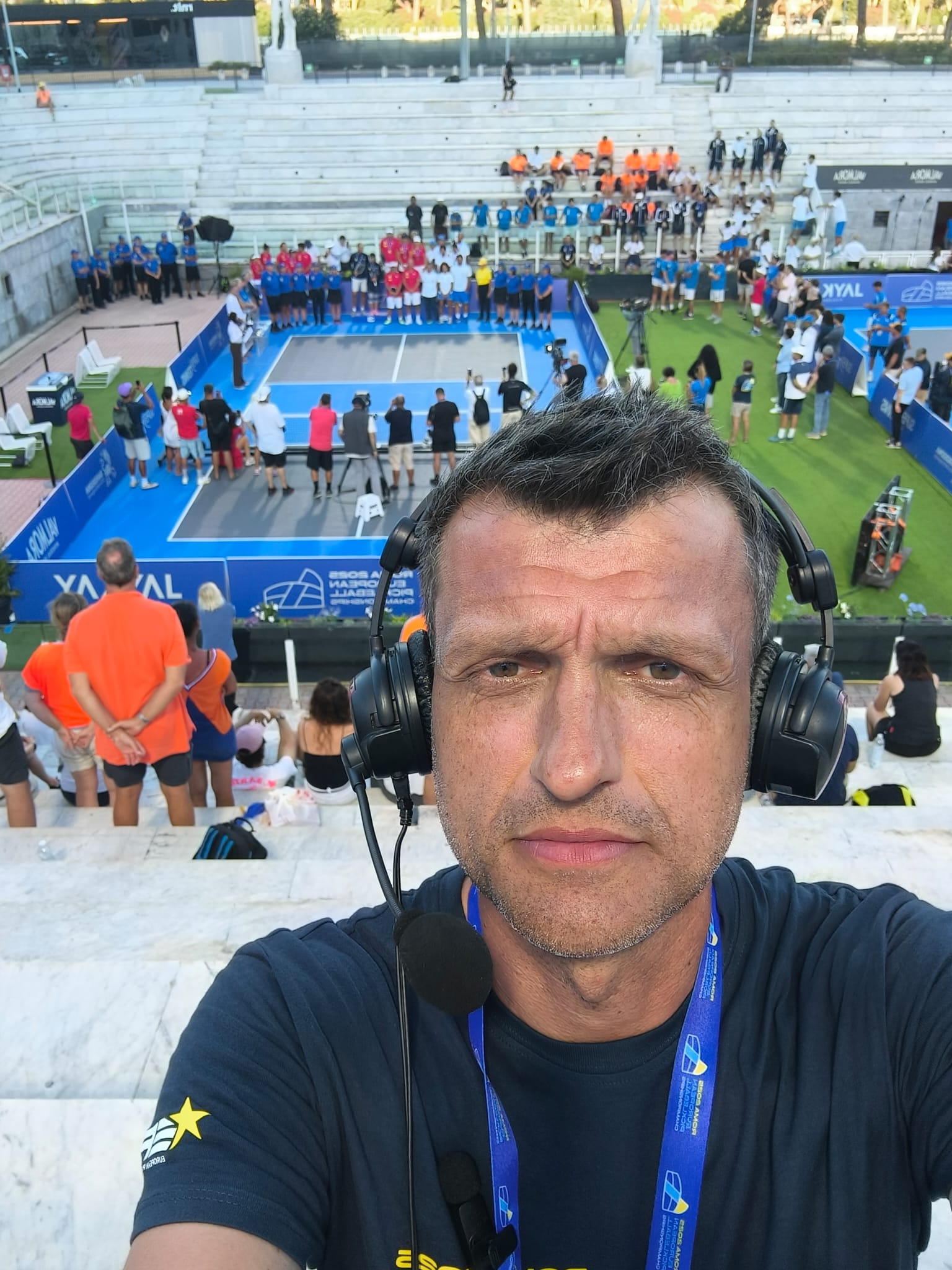
Chris Beaumont
Founder and Editor-in-ChiefChris Beaumont is the founder and Editor-in-Chief of World Pickleball Magazine. Chris follows the global game closely, reporting on the latest news, developments, stories and tournaments from all five continents. He also hosts the World Pickleball Podcast, interviewing people at…
View All Articles →